






- Monday 8:00AM - 5:00PM
- Tuesday 8:00AM - 5:00PM
- Wednesday 8:00AM - 5:00PM
- Thursday 8:00AM - 5:00PM
- Friday 8:00AM - 5:00PM
- Saturday 9:00AM - 1:00PM
- Sunday Closed
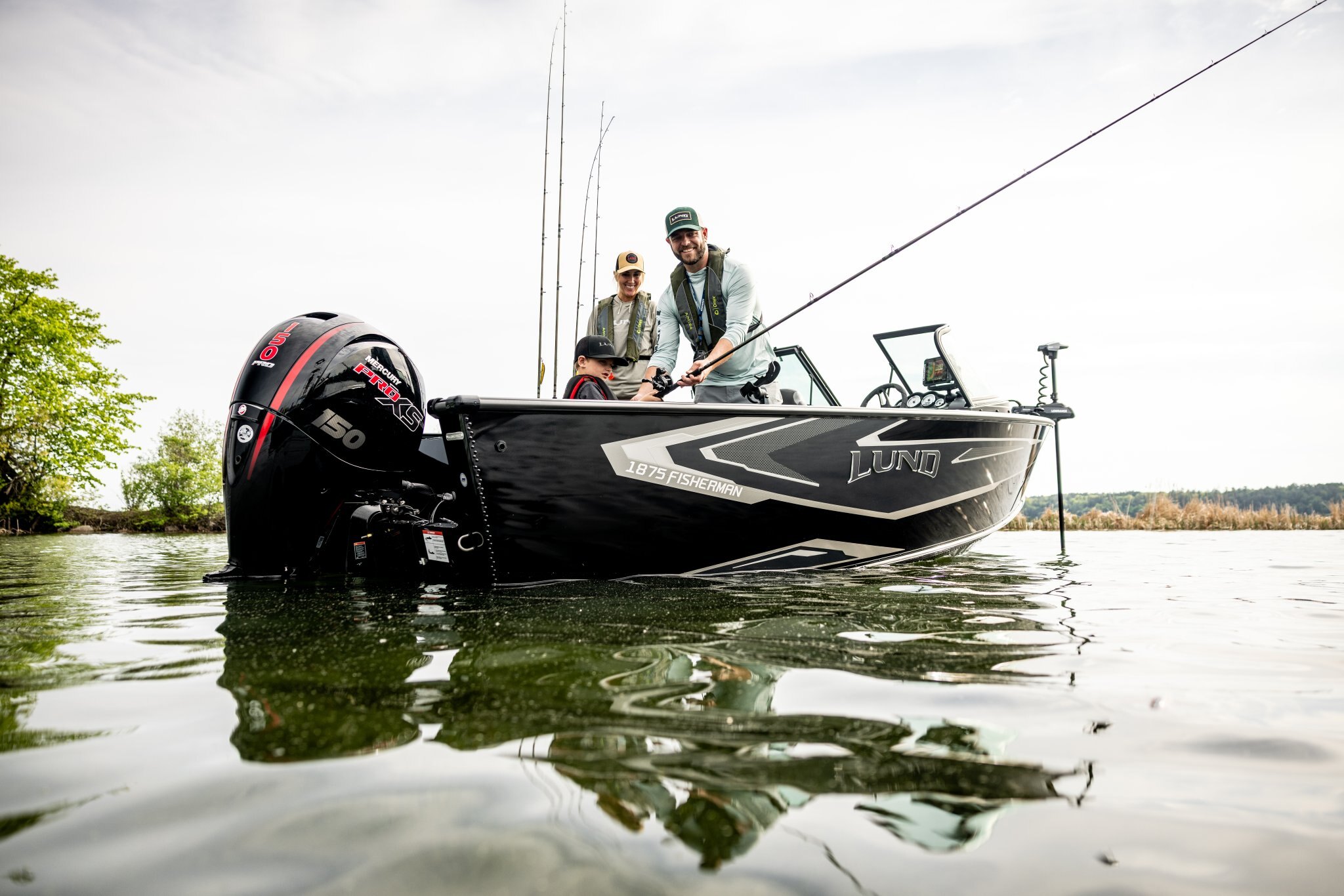
How to Choose the Right Aluminum Fishing Boat: A Complete Buyer's Guide
Choosing the right aluminum fishing boat involves more than selecting a size and engine. Whether you are buying your first boat, upgrading an older model or looking for something the whole family can enjoy, the right choice depends on where you fish, how you use your boat and what matters most to you on the water.
Today's aluminum fishing boats range from compact, practical fishing boats to premium models equipped with powerful outboards, advanced electronics, specialized storage and comfortable seating.
At Mobile Marine in Huntsville, Ontario, we help customers choose boats for a wide range of fishing styles and conditions. From smaller inland lakes and rivers to the larger waters of Muskoka and Georgian Bay, we understand that different anglers have different priorities.
The best fishing boat is one that matches your fishing style, performance expectations, preferred features and budget.
This guide covers the key decisions to consider when shopping for an aluminum fishing boat, including hull design, size, horsepower, layout, electronics and overall value.
1. Start With How You Plan to Use Your Fishing Boat
Before comparing boat models, consider how you spend your time on the water.
Your preferred fishing techniques can influence the ideal layout, equipment and boat configuration.
Walleye fishing: Whether you prefer trolling, jigging, drifting or casting, precise boat control can be important. Many walleye anglers appreciate quality sonar, GPS mapping and a trolling motor or kicker motor suited to their techniques.
Bass fishing: Spacious casting decks, convenient rod and tackle storage, and a bow-mounted trolling motor are popular features. Many anglers also value electronics that help identify underwater structure and maintain precise positioning.
Lake trout fishing: Trolling and vertical jigging are both popular techniques. Depending on how you fish, useful equipment may include reliable sonar, precise speed and position control, downriggers and rod holders.
Pike and muskie fishing: Generous casting space, storage for longer rods and larger lures, and room to safely land and handle fish can be particularly valuable.
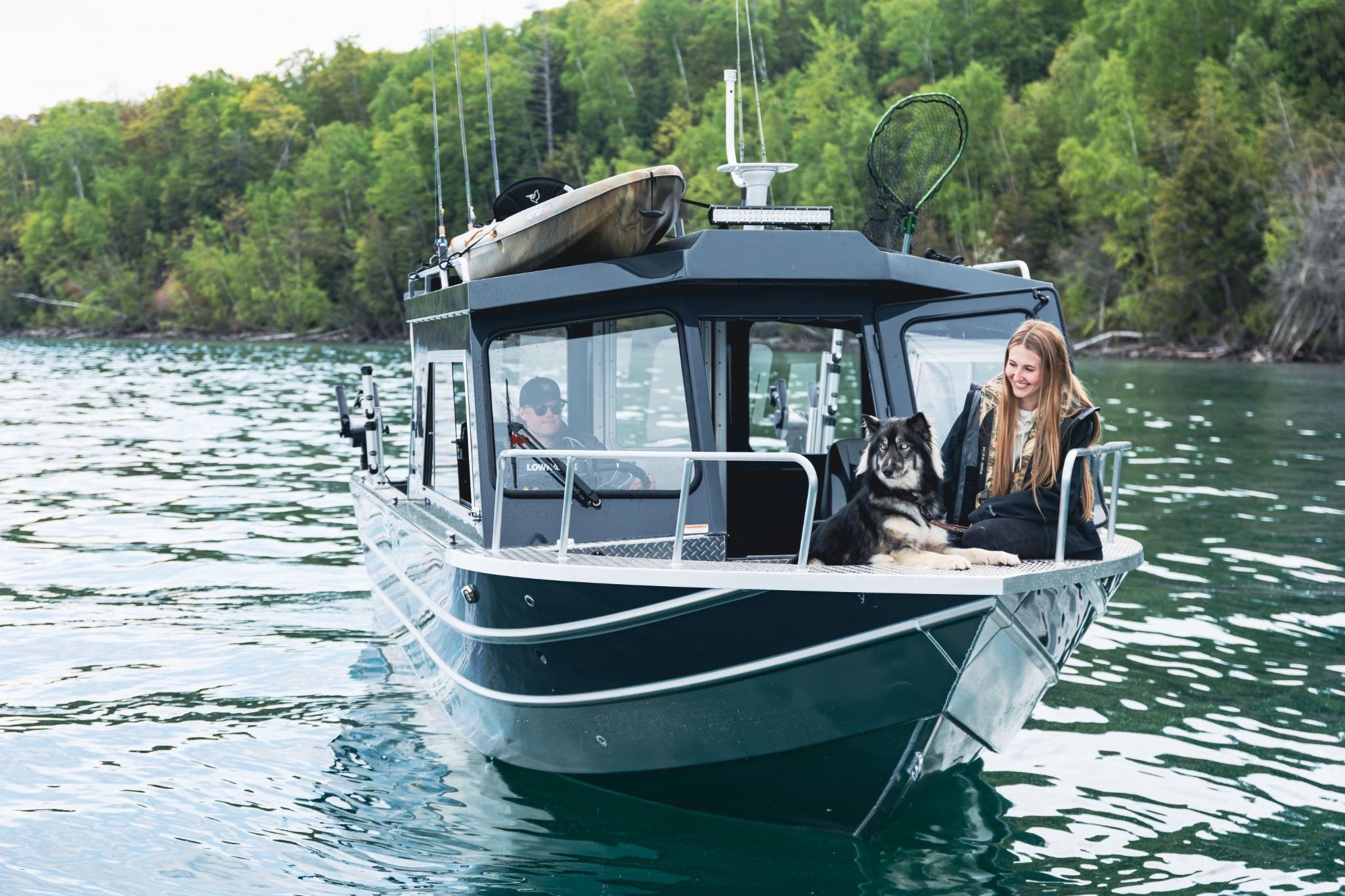
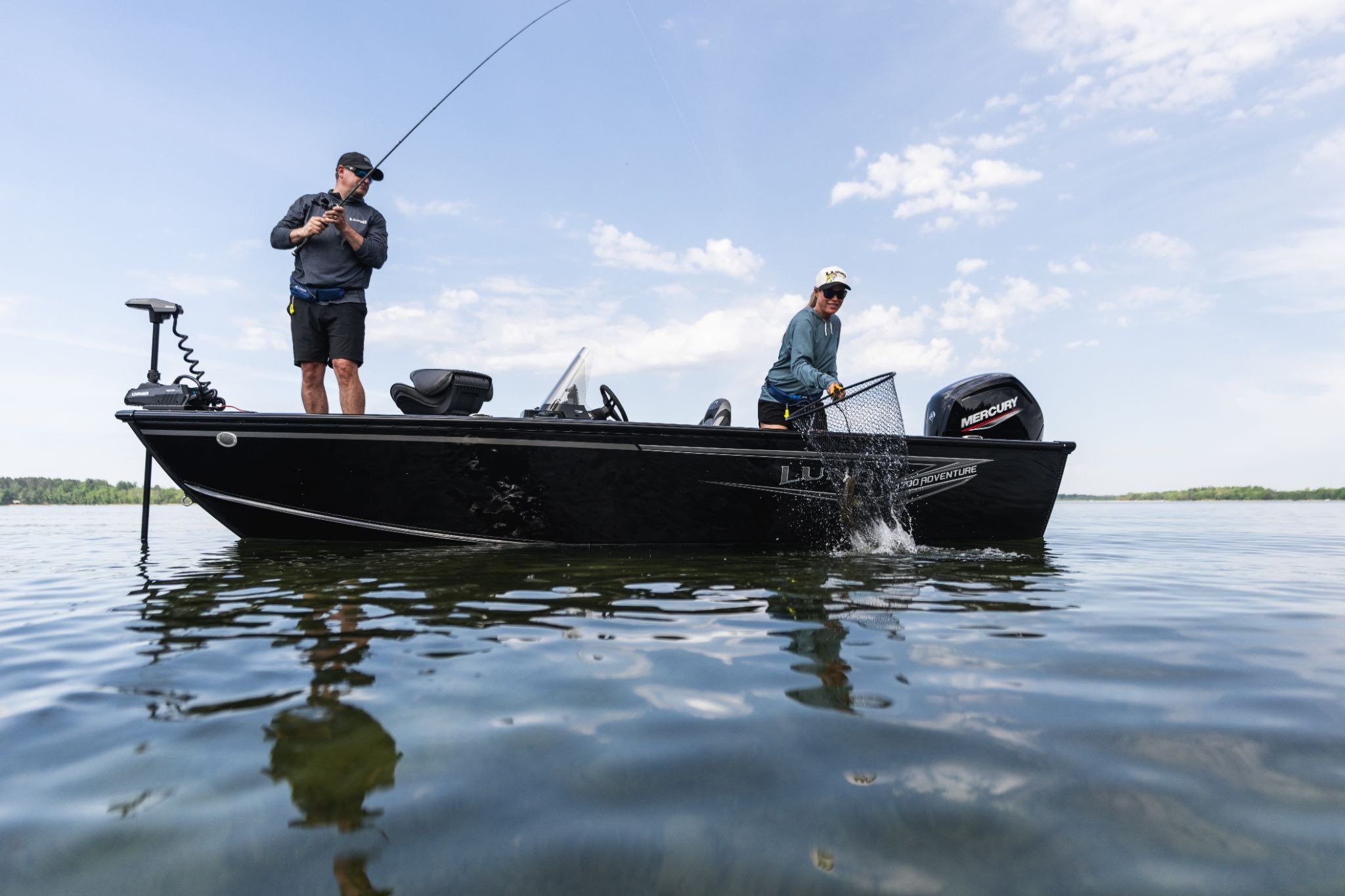
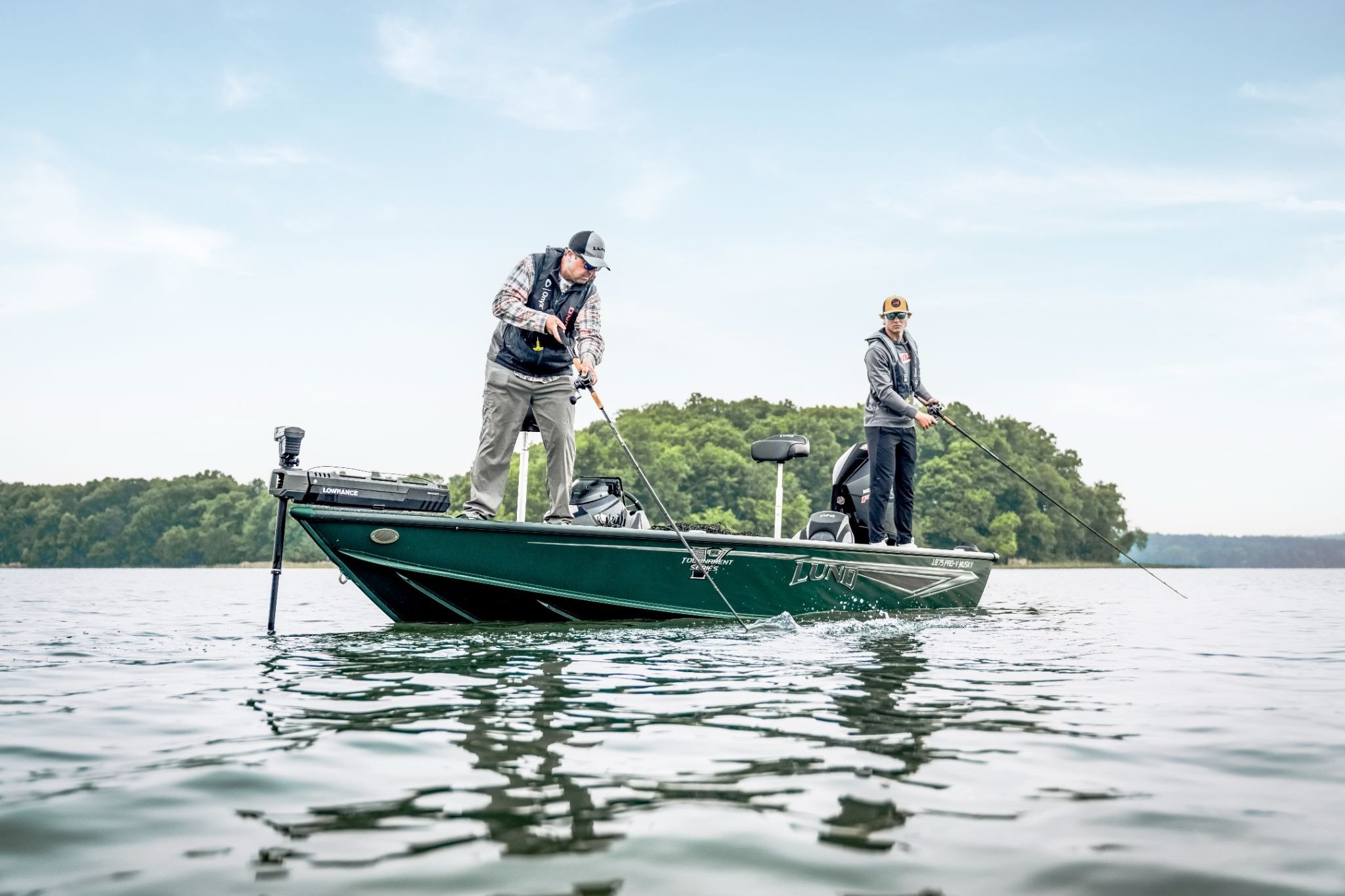
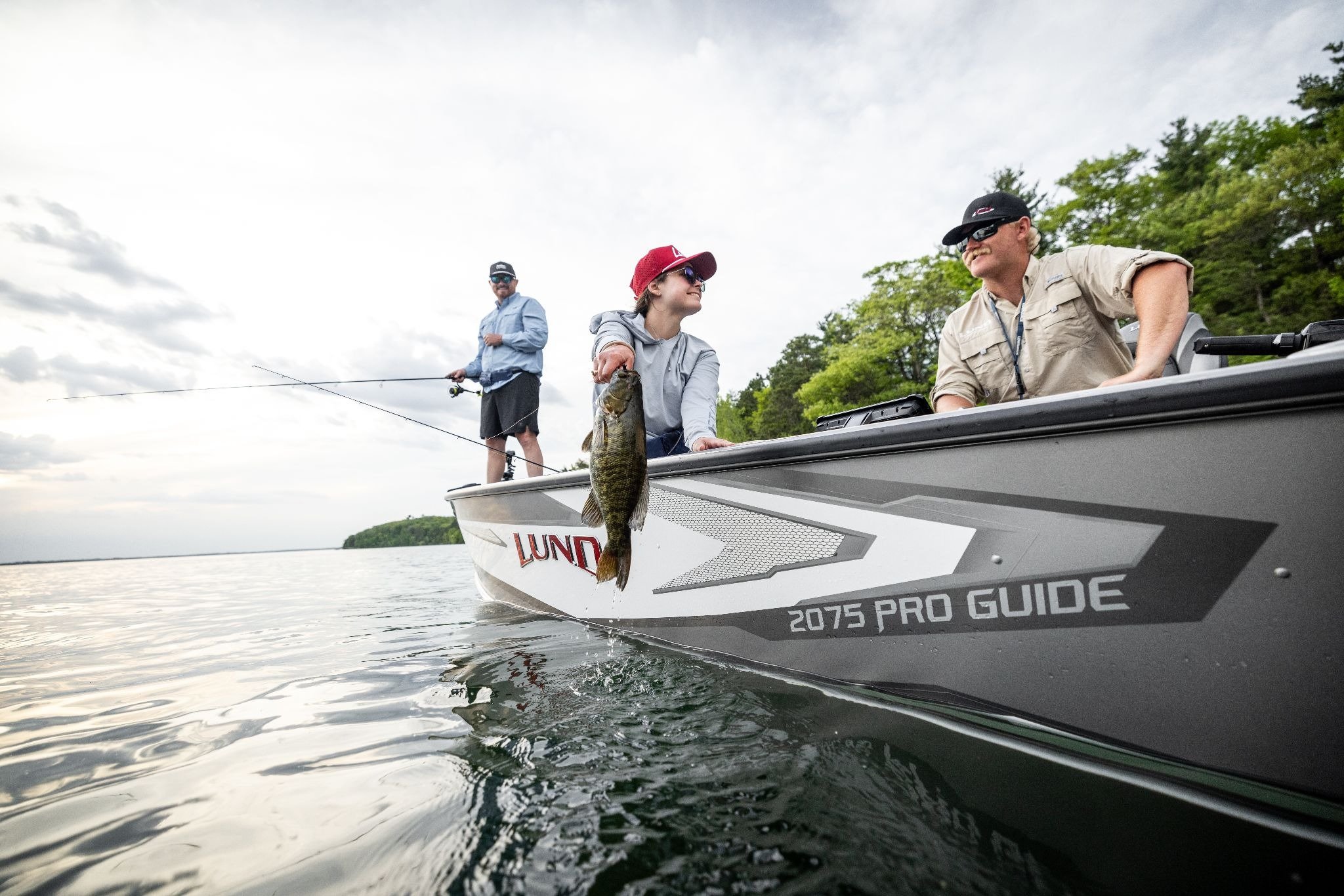
These are examples of equipment preferences rather than rules for particular species. Many anglers use several techniques throughout the season.
You should also consider whether you regularly travel between lakes, how many people typically join you and whether your boat will be used for family cruising, swimming or watersports.
A fishing boat that is ideal for one person fishing alone may not be the best choice for a family that wants to enjoy several different activities.
2. Choosing the Right Aluminum Fishing Boat Hull
Hull design affects how a boat handles waves, how it performs at different speeds and how comfortable it feels in the conditions you regularly encounter.
Deep-V Fishing Boats
Deep-V aluminum fishing boats are popular throughout Ontario because they offer a versatile combination of fishing capability, ride comfort and performance.
Their V-shaped hulls are designed to travel through waves and choppy water, making them appealing to anglers who frequently fish larger lakes.
Many deep-V boats also feature higher sides, or freeboard, which can help provide additional protection from spray and make passengers feel more enclosed within the boat.
For customers fishing larger Muskoka lakes or travelling to Georgian Bay, these characteristics can be particularly valuable.
However, a deeper-V hull does not automatically mean a boat is more stable when stationary. Stability depends on the complete hull design, width, loading and operating conditions.
Modified-V and Utility Fishing Boats
Modified-V and utility aluminum boats are often practical choices for sheltered lakes, rivers and anglers who prefer a compact, straightforward boat.
These boats are generally lighter, easier to trailer and available at lower price points than larger, more extensively equipped fishing models.
They can be particularly appealing to customers who value easy transportation, open fishing space and simple operation.
Which Hull Is Best?
There is no single hull design that is ideal for everyone.
Someone who primarily fishes smaller, sheltered lakes may prefer a compact utility boat. An angler who regularly travels across larger, more exposed water may prioritize ride comfort, higher freeboard and additional weather protection.
The best choice depends on the conditions you regularly encounter, not simply the size of the lake.
3. What Size Fishing Boat Do You Need?
Boat size influences fishing space, passenger comfort, storage, performance and ease of transportation.
Rather than choosing based on length alone, consider the number of passengers, the equipment you carry and how you plan to use the boat.
|
Boat Size |
Common Considerations |
|
Under 16 feet |
Compact fishing, easy transportation and simpler equipment |
|
16–17 feet |
Versatile fishing for smaller groups, with useful storage and passenger space |
|
18–19 feet |
Popular for fishing and family recreation, with additional room and comfort |
|
20 feet and larger |
More space for passengers, equipment and premium fishing features |
These are general guidelines. Passenger capacity, performance and equipment options vary by model. Always check the manufacturer's passenger and maximum load ratings.
Is a Bigger Fishing Boat Better?
A larger fishing boat can offer meaningful advantages, including more casting space, larger storage compartments, additional seating and room for sophisticated electronics.
Larger models may also accommodate more powerful outboards, multiple batteries, kicker motors and specialized fishing equipment.
For anglers who spend long days on the water, travel longer distances or regularly carry passengers, these features can make a substantial difference.
However, larger boats also generally cost more, weigh more and require greater consideration when trailering, launching and storing.
Remember that the number of people a boat is rated to carry is not necessarily the number who can comfortably fish from it at the same time.
The right size is the one that provides the space and capability you need without creating unnecessary compromises.
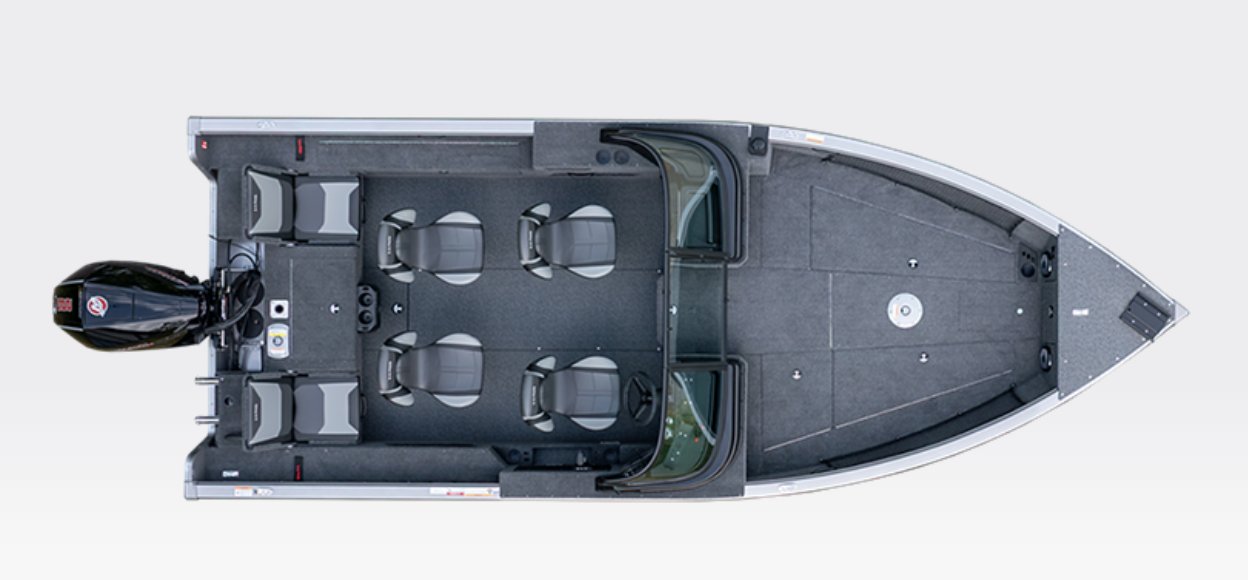
4. Tiller, Side Console or Full Windshield?
The steering and windshield configuration is one of the most important choices when purchasing a fishing boat.
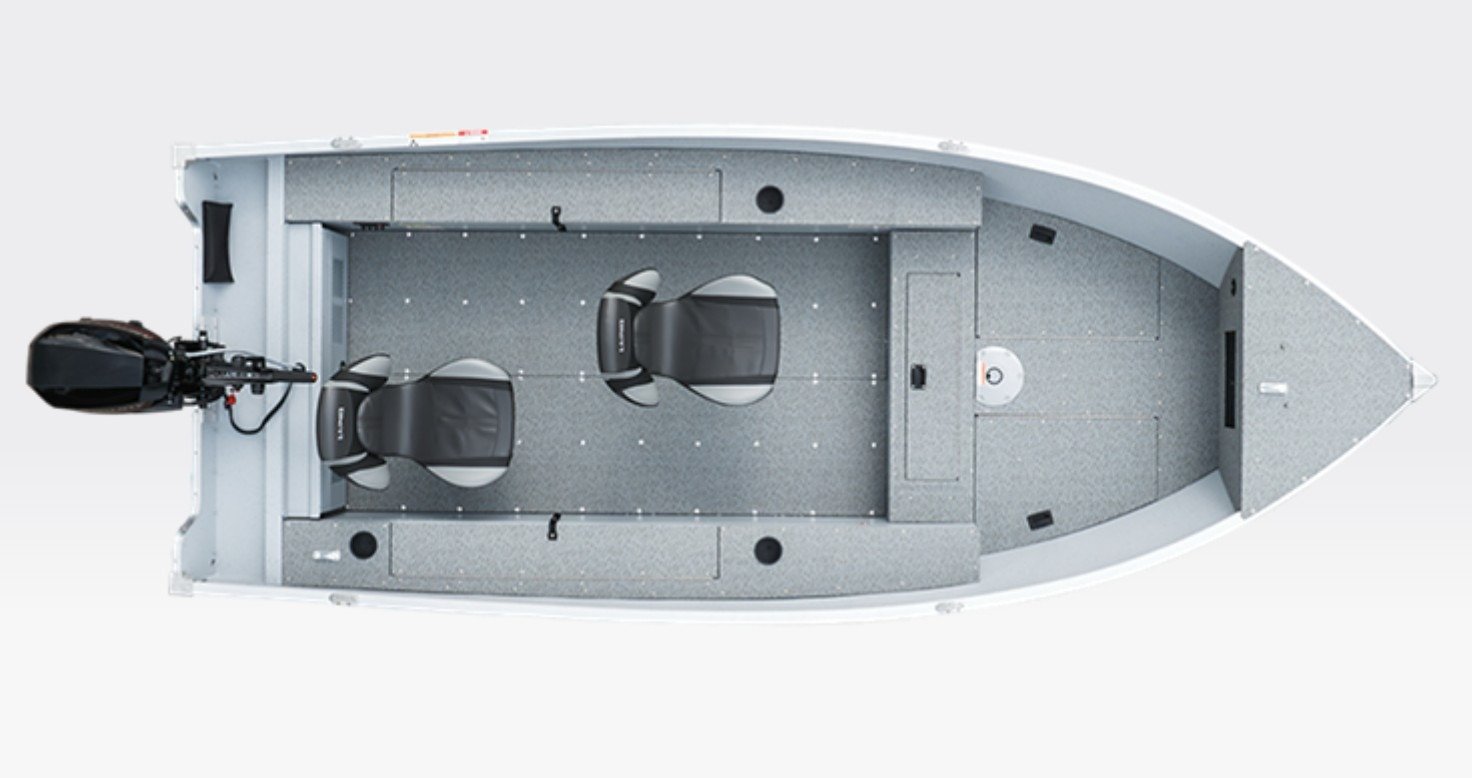
Tiller Fishing Boats
Tiller boats provide direct engine control and generally maximize open floor space.
With the operator positioned toward the stern, they are popular with anglers who enjoy trolling and want a straightforward fishing layout.
They can also be more affordable than comparable console-equipped boats.
Consider a tiller if: You prioritize fishing space, direct steering control and a practical layout.
Side Console Fishing Boats
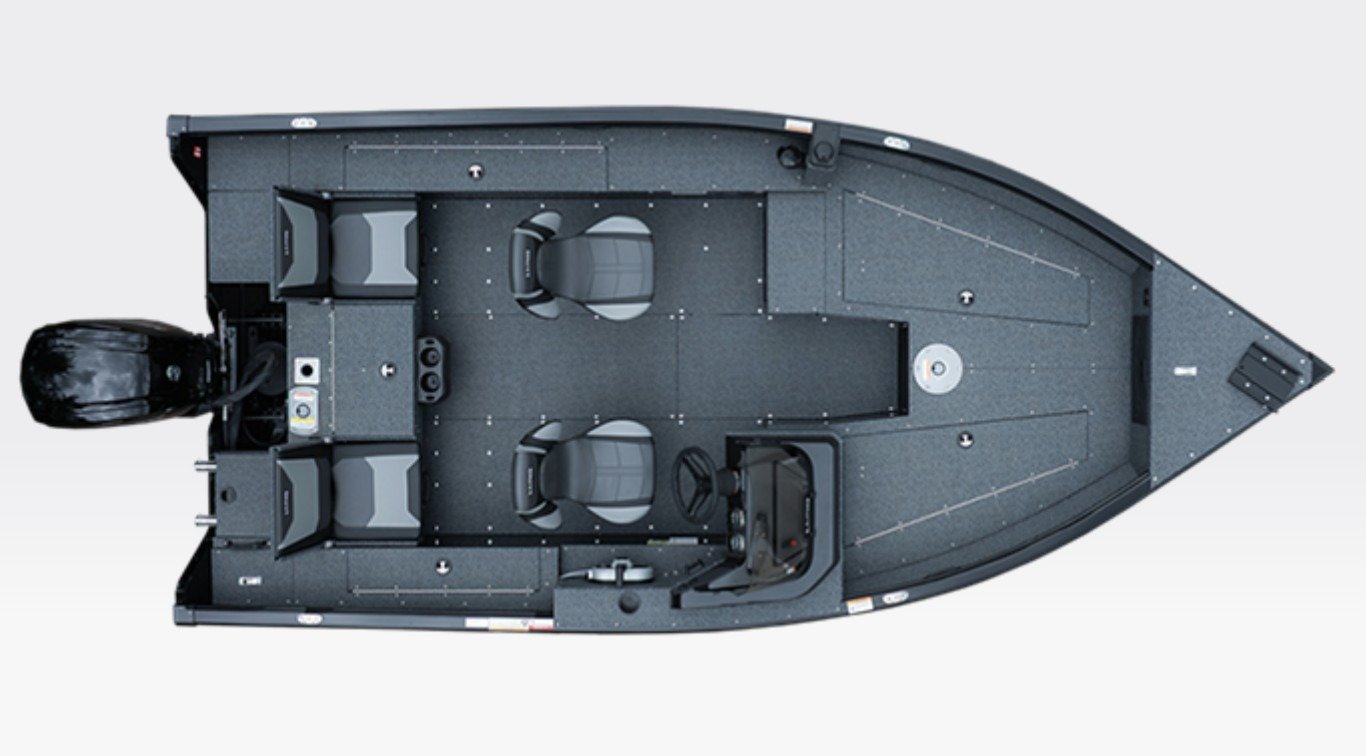
Side-console boats offer steering-wheel operation while keeping much of the cockpit open.
The windshield provides some protection for the operator, and the layout maintains convenient access to fishing equipment.
Consider a side console if: You want a balance of open fishing space, steering-wheel control and driving comfort.
Full Windshield Fishing Boats
Dual-console and full-windshield boats are particularly appealing to anglers who also enjoy family boating.
A full windshield offers additional wind protection for the operator and passengers, especially during longer cruises or cooler weather.
In Muskoka, a full windshield can make a noticeable difference on cool spring mornings and windy fall afternoons.
Depending on the model, an available sport top or weather enclosure can provide additional protection from wind, rain and sun.
Consider a full windshield if: Passenger comfort, family recreation and longer cruises are important to you.
5. How Much Horsepower Do You Need?
Choosing the right outboard is just as important as selecting the boat itself.
Horsepower affects acceleration, cruising performance and how the boat handles additional passengers and equipment.
Avoid Choosing an Engine Based on Price Alone
At Mobile Marine, we have worked with customers who purchased an attractively priced boat package only to discover that the engine did not provide the performance they expected.
Once passengers, batteries, fishing equipment and other gear are aboard, an undersized engine can leave the boat feeling sluggish.
In some cases, customers begin considering a new boat when the real issue is the engine package.
If the existing boat is otherwise suitable, repowering with an appropriately matched outboard may be worth exploring.
Should You Choose the Maximum Rated Horsepower?
We generally encourage customers to consider the maximum horsepower permitted by the boat manufacturer, particularly when performance and versatility are important.
A properly matched higher-horsepower engine can provide stronger acceleration and better performance when carrying additional weight.
However, maximum horsepower is not necessary for every customer. The right engine should reflect your budget, typical passenger load, fishing techniques and performance expectations.
It is also important not to assume that a larger engine will always use more fuel or that lower RPM automatically means better fuel economy. Actual consumption depends on the boat, engine, propeller, load and operating speed.
Our recommendation is to compare complete boat-and-engine packages rather than focusing only on the advertised starting price.
6. Can an Aluminum Fishing Boat Be a Family Boat?
Absolutely. Modern aluminum fishing boats can be surprisingly versatile.
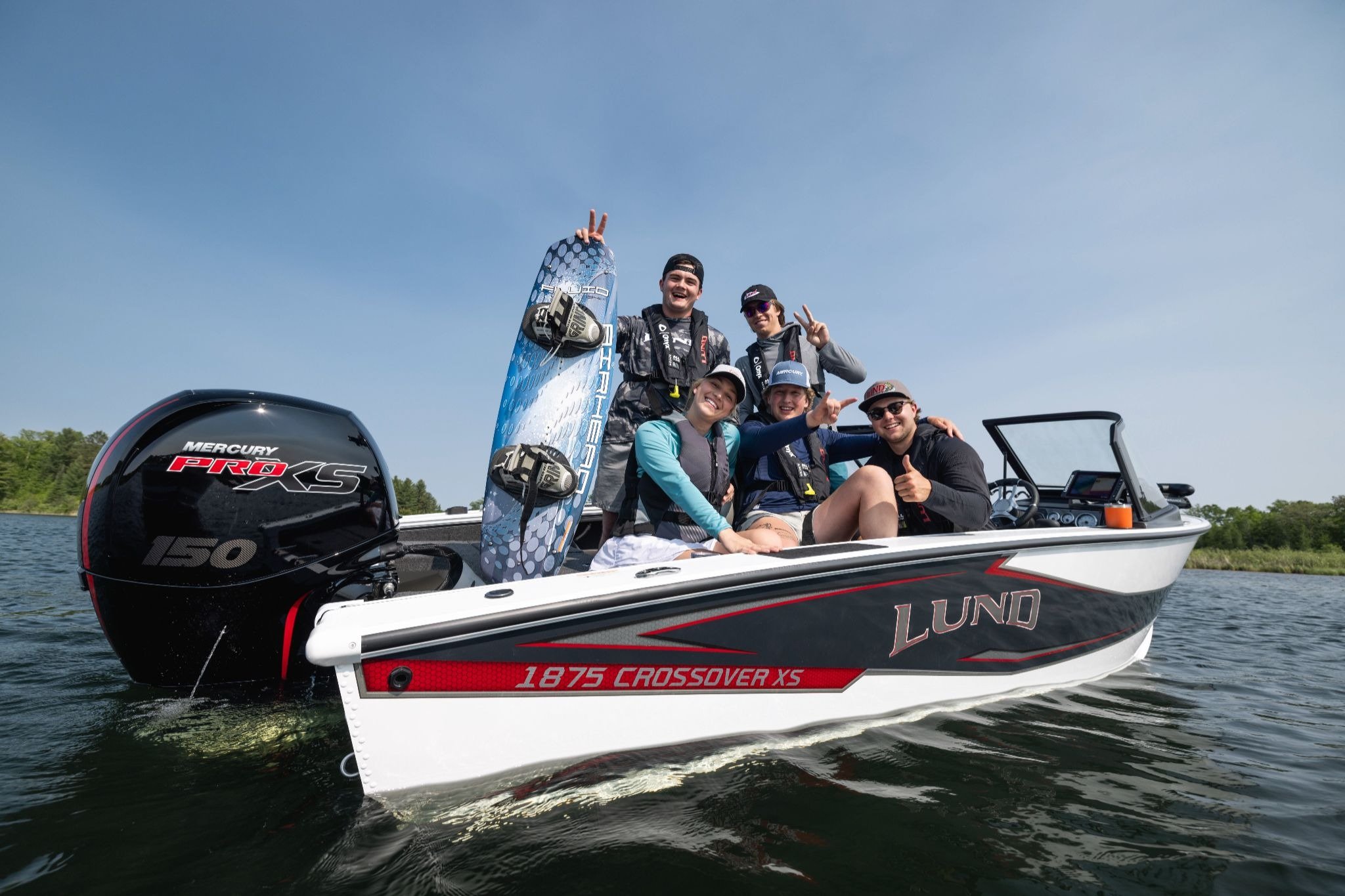
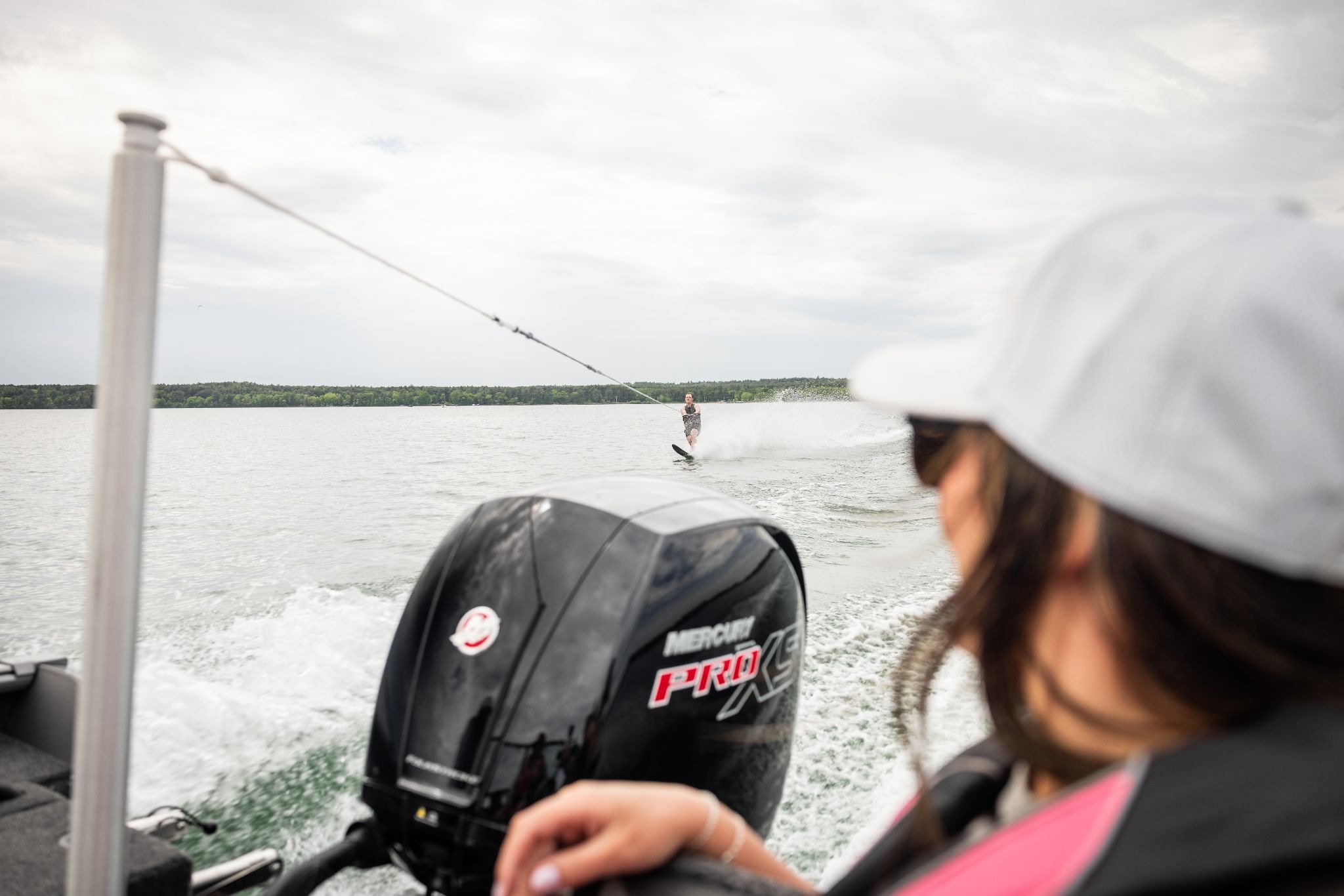
Many customers want a boat that is properly equipped for fishing but also comfortable for cruising, swimming and watersports.
Features such as additional passenger seating, comfortable layouts, storage and available watersports equipment can make a fishing boat suitable for a wide range of activities.
The Lund Impact and Crossover
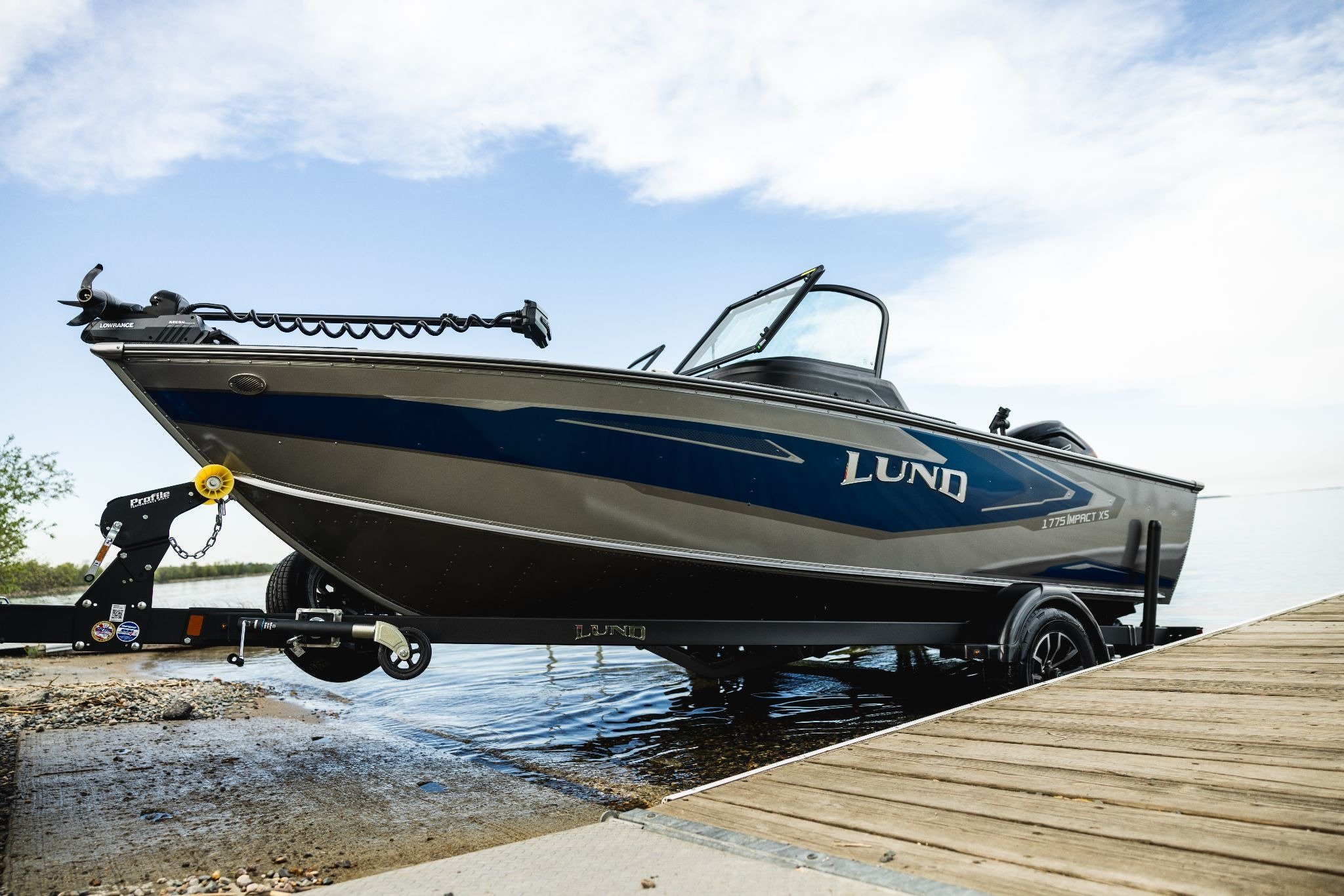
The Lund Impact is our best-selling Lund model at Mobile Marine, and its versatility is a major reason for its popularity.
Many customers choose to add an available ski tow bar, allowing them to enjoy tubing and other approved watersports while retaining the fishing features they value.
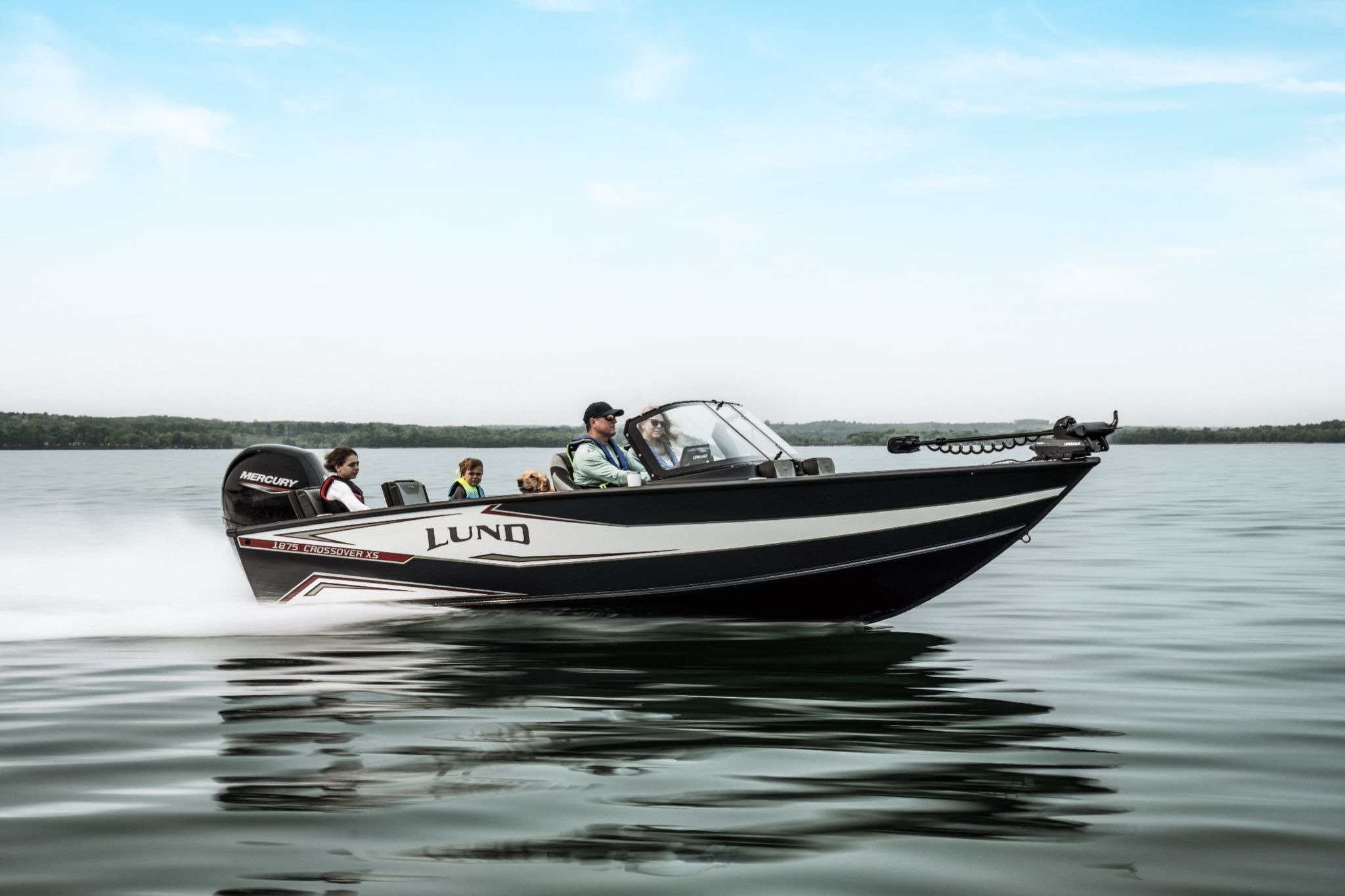
The Lund Crossover has also become increasingly popular with customers who want to balance serious fishing with family recreation.
For many families, a versatile fishing boat eliminates the need to choose between a dedicated fishing boat and a separate recreational boat.
Before purchasing, consider how often you will fish compared with how often you will cruise, swim or enjoy watersports.
7. Fishing Electronics, Trolling Motors, Kicker Motors and Rigging
The right equipment can make a significant difference in how effectively and comfortably you fish.
However, more equipment is not automatically better. The goal is to choose features that suit your preferred techniques.
Choosing a Trolling Motor
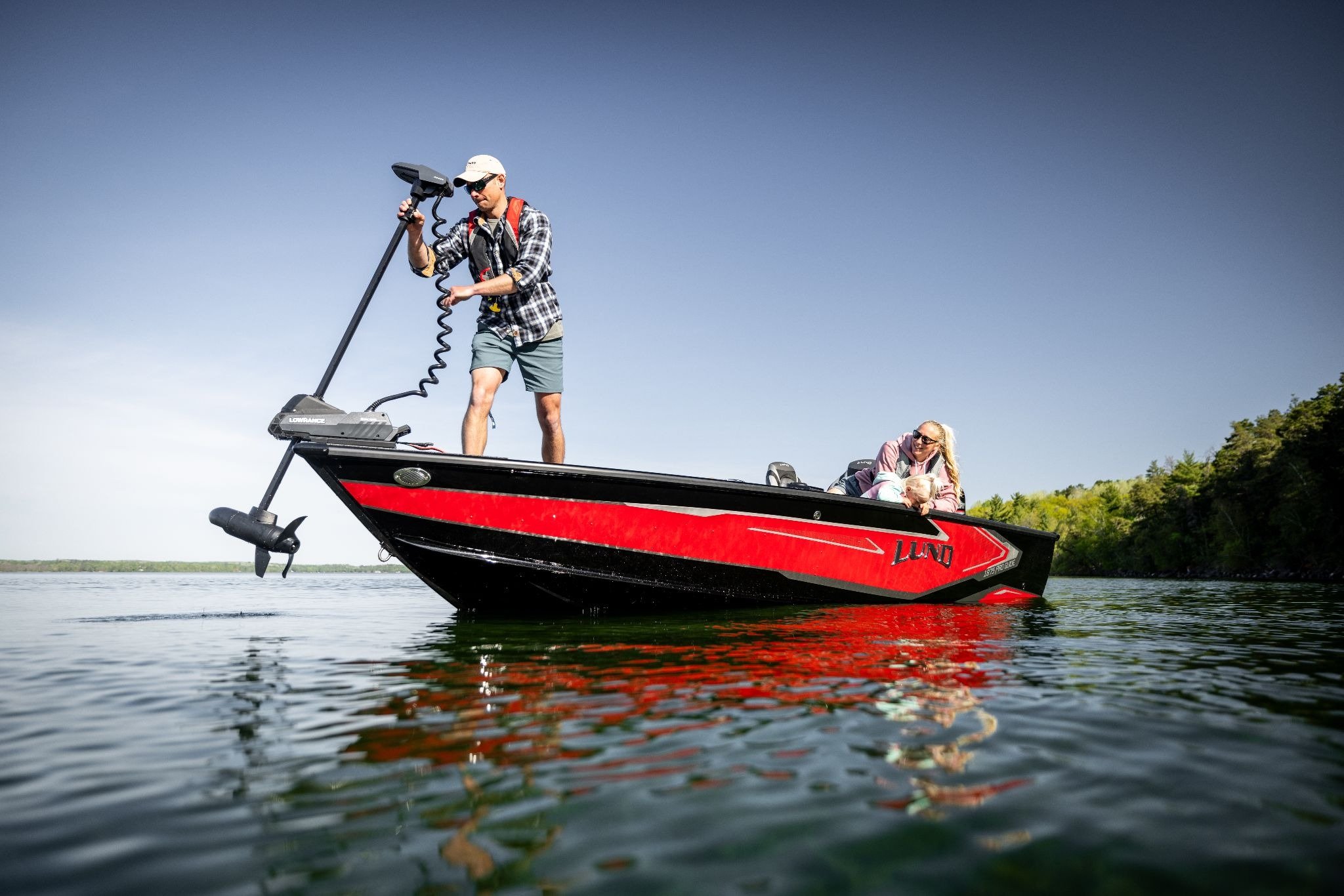
A bow-mounted trolling motor provides precise low-speed control and is especially useful for casting, fishing structure and maintaining position.
Important considerations include:
-
Thrust: Match the motor to the boat's size, weight and typical operating conditions.
-
Battery system: Common configurations include 12V, 24V and 36V systems, depending on the motor and required thrust.
-
Shaft length: The shaft must be long enough to keep the propeller properly submerged in the conditions you fish.
-
GPS positioning: Some motors can hold the boat near a selected location without a traditional anchor.
-
Controls and compatibility: Foot pedals, handheld remotes and integration with compatible electronics may influence your choice.
A properly selected trolling motor is often one of the most worthwhile additions to a fishing boat.
Should You Add a Kicker Motor?
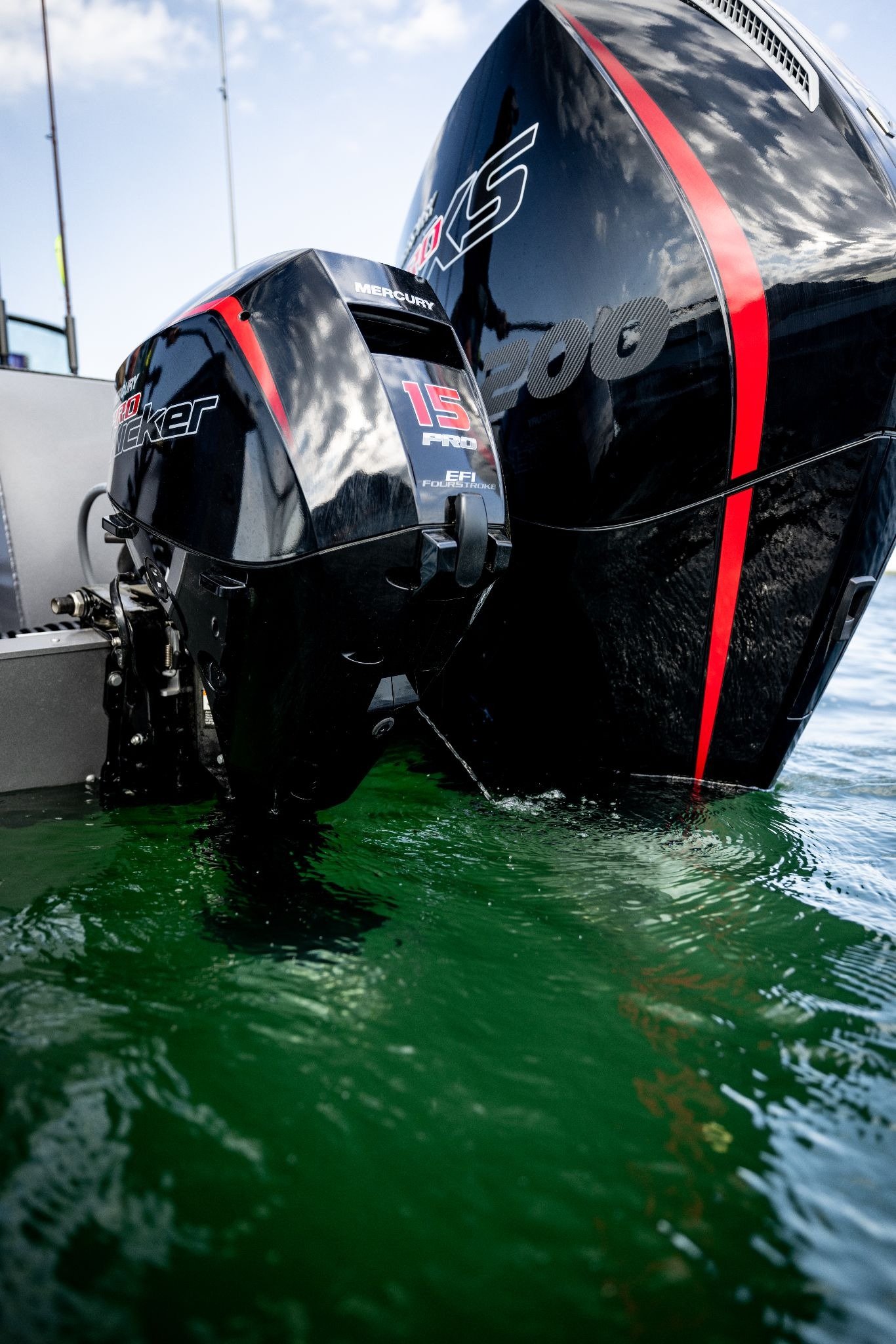
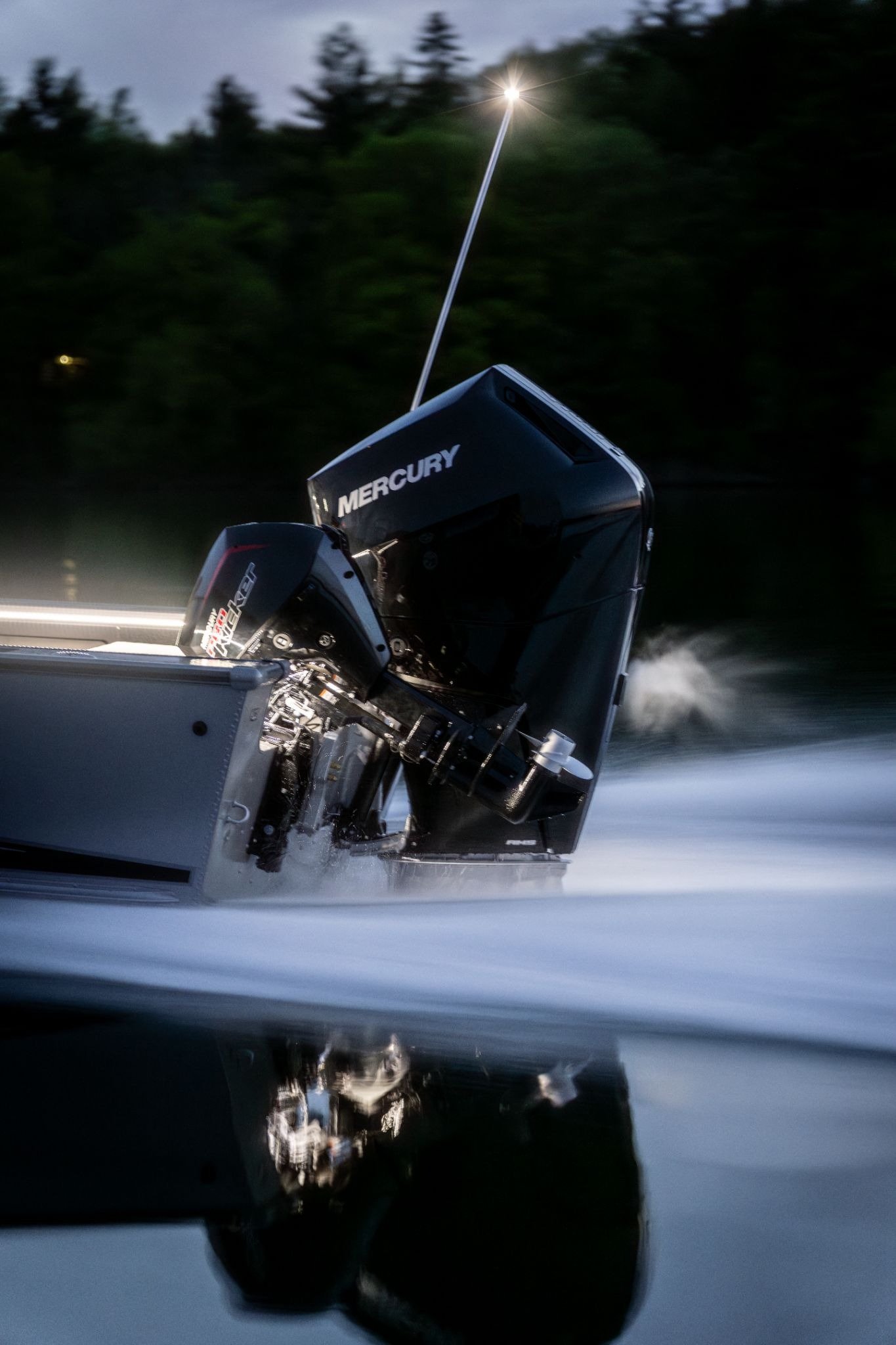
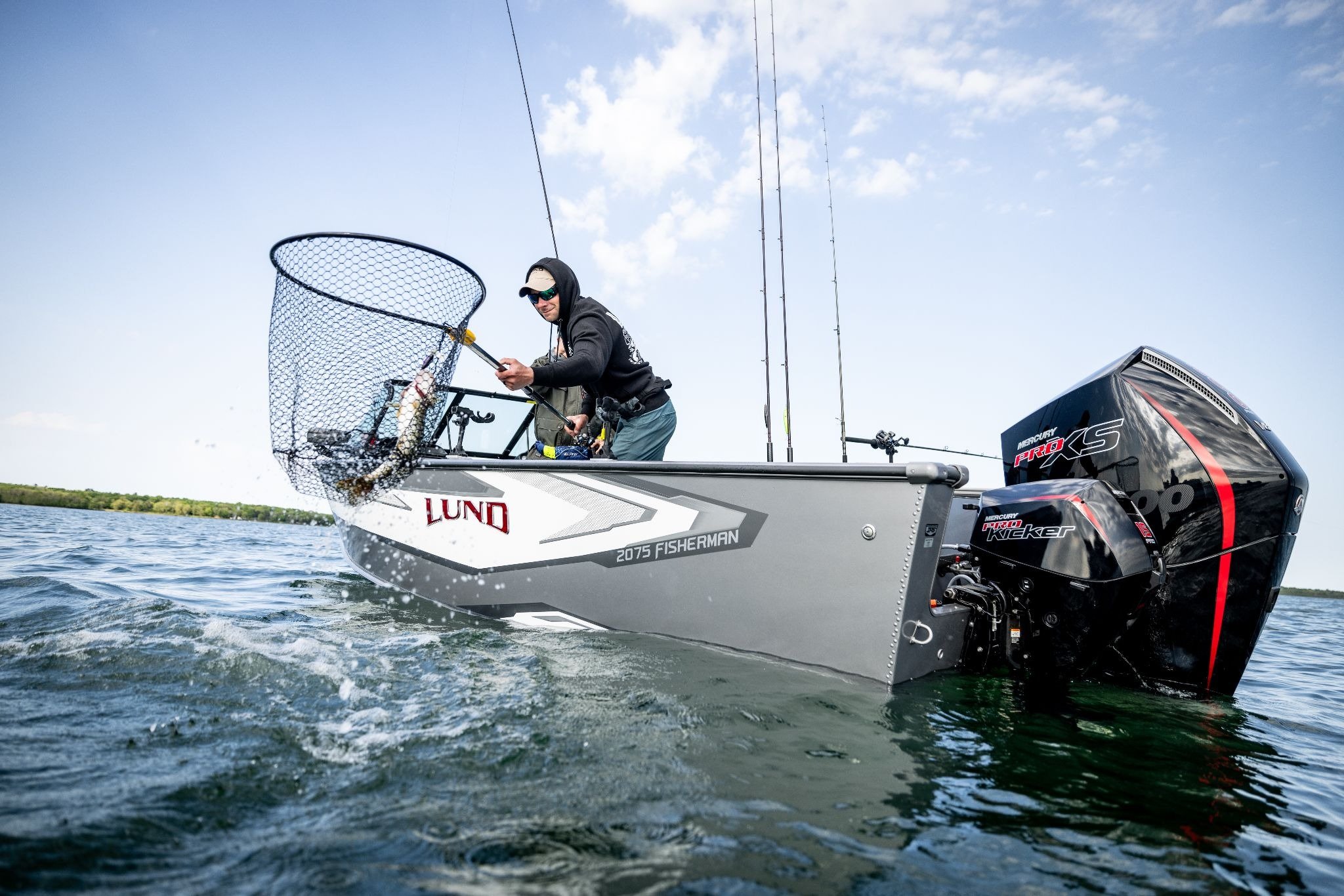
A kicker is a smaller auxiliary outboard mounted alongside the main engine.
It is particularly useful for anglers who spend extended periods trolling and want precise control at slower speeds.
Benefits can include:
-
Consistent low-speed trolling
-
Extended operation without relying on electric trolling motor batteries
-
Reduced trolling hours on the main outboard
-
An additional means of propulsion if the primary engine becomes unavailable, provided conditions and the kicker's operation permit
Adding a kicker also introduces additional maintenance and ownership costs.
For anglers who regularly fish larger lakes or travel significant distances, backup propulsion can provide additional peace of mind. It does not replace proper safety equipment or emergency planning.
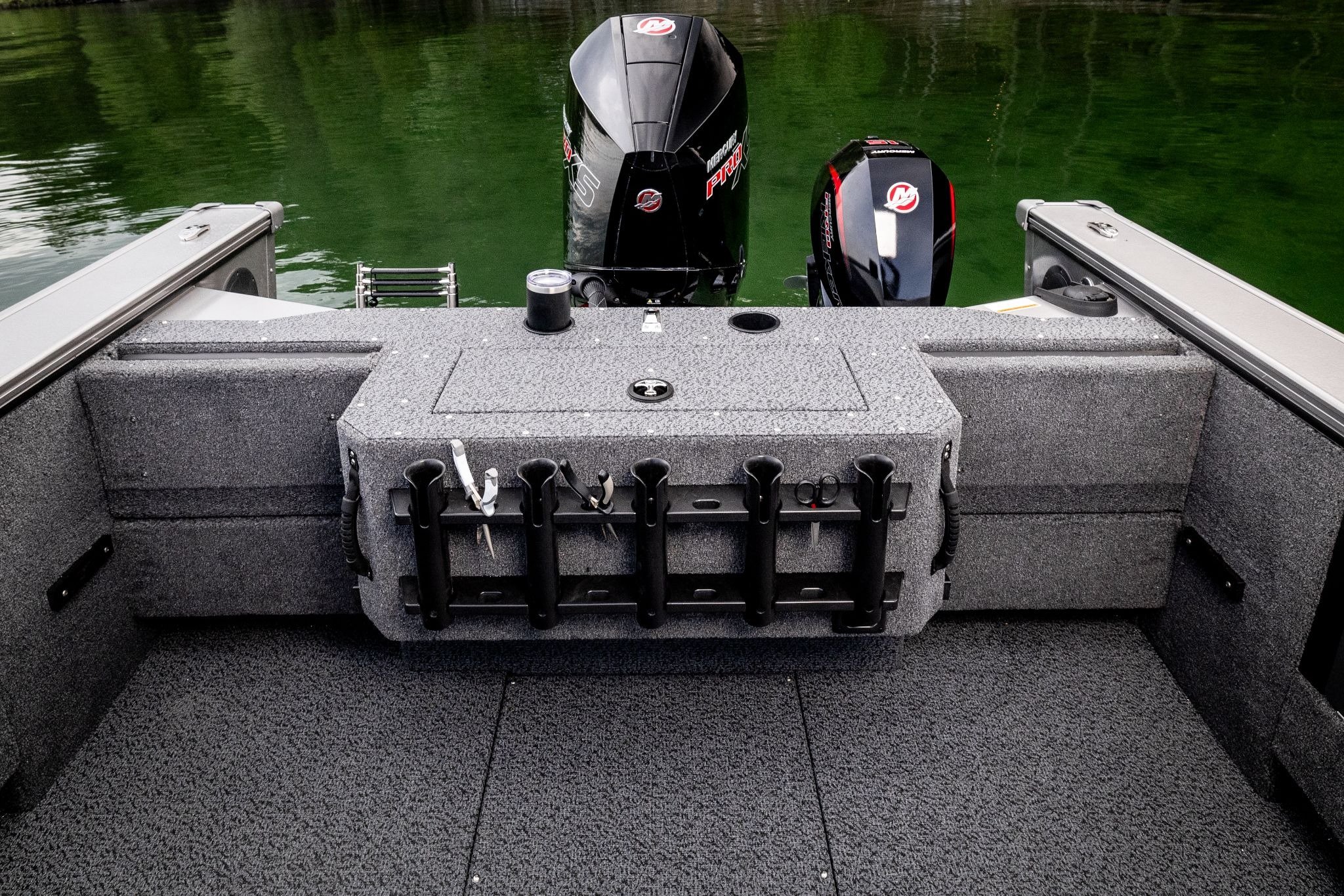
Trolling Motor, Kicker Motor or Both?
These motors serve different purposes.
An electric trolling motor excels at precise positioning, casting along shorelines and holding position with GPS features.
A kicker motor is useful for sustained trolling and controlled low-speed operation.
Some anglers benefit from having both, while others only need one.
If you are considering a kicker, discuss it before ordering your boat. Mounting, steering, fuel connections, transom weight and manufacturer requirements should all be considered when planning the package.
Choosing Fishing Electronics
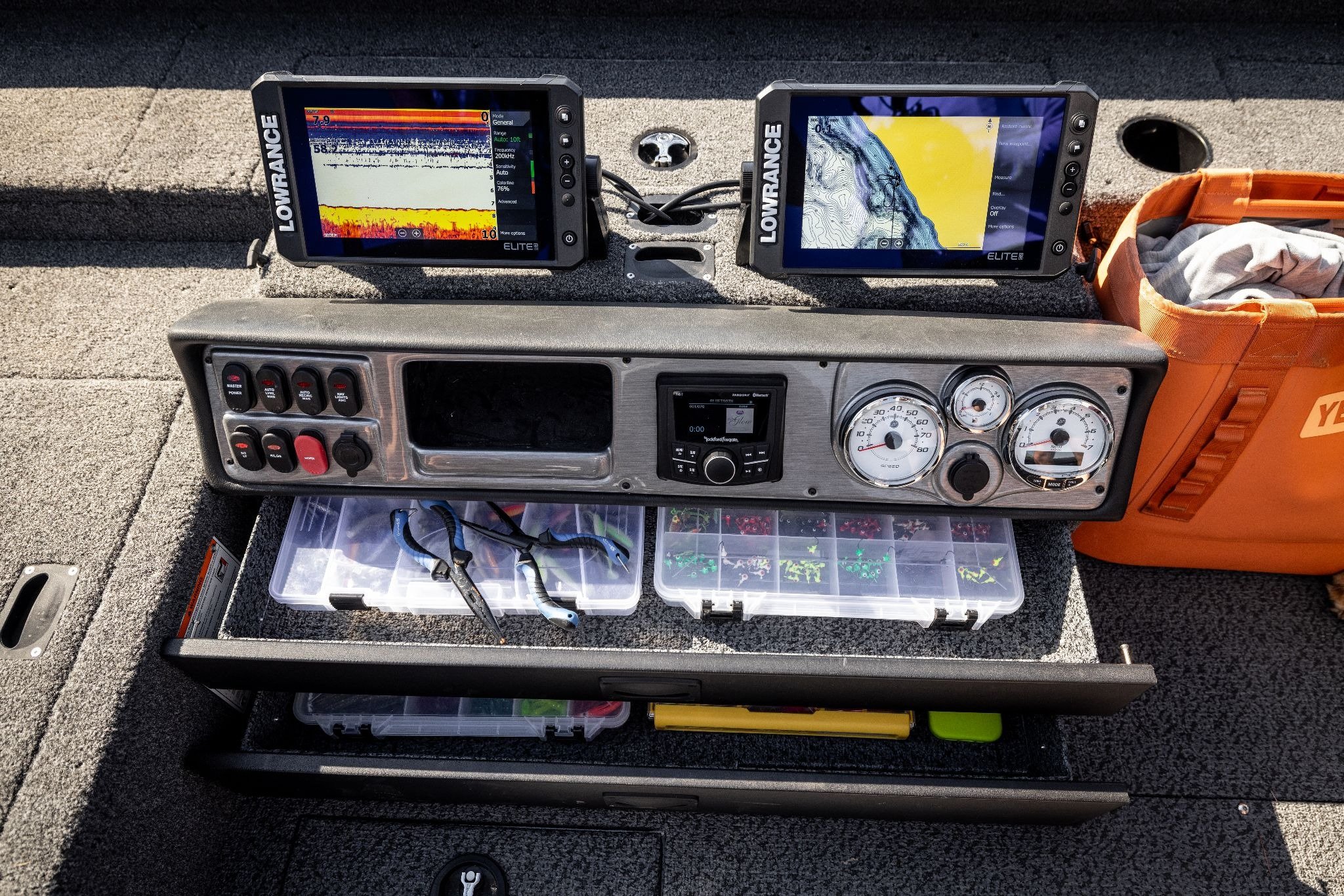
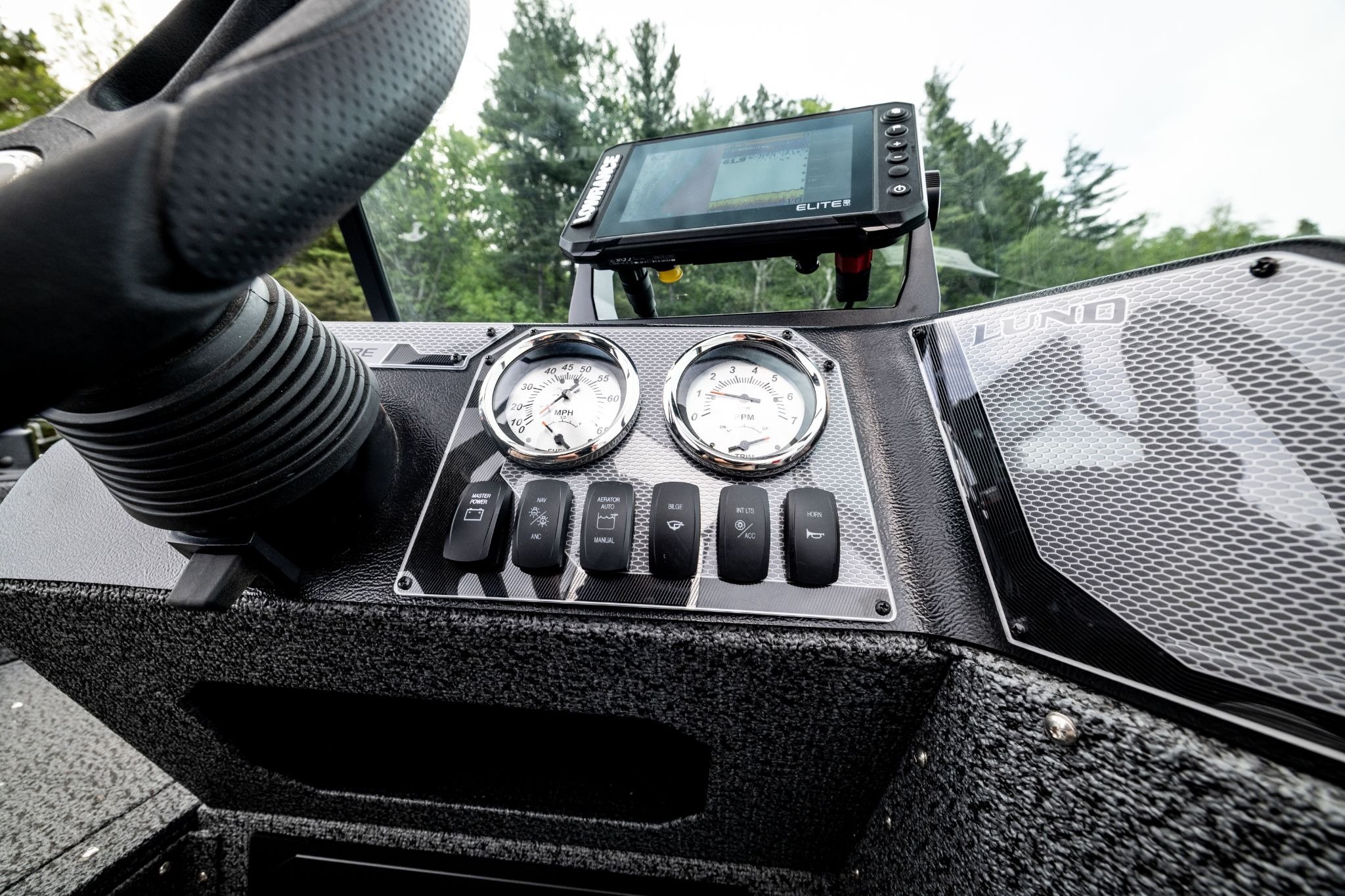
Modern fish finders and chartplotters offer a wide range of capabilities.
Traditional sonar: Displays depth, bottom information and targets beneath the boat.
Down imaging: Provides detailed views of structure and objects below the boat.
Side imaging: Scans areas beside the boat to help locate structure and potential fishing locations.
Live sonar: Offers near-real-time views of underwater activity within the transducer's field of view.
GPS and mapping: Supports navigation, route planning and marking fishing locations. Check chart coverage for the lakes you regularly fish.
The right combination depends on your techniques, experience and budget.
How Many Screens Do You Need?
Some anglers prefer a single multifunction display at the helm, while others choose separate screens at the helm and bow.
Anglers who spend considerable time trolling may prioritize a larger helm display.
Those who frequently cast from the bow may benefit from a dedicated display positioned near the trolling motor.
Consider screen visibility, mounting space, compatibility and the information you want available while fishing.
Factory Equipment or Custom Rigging?
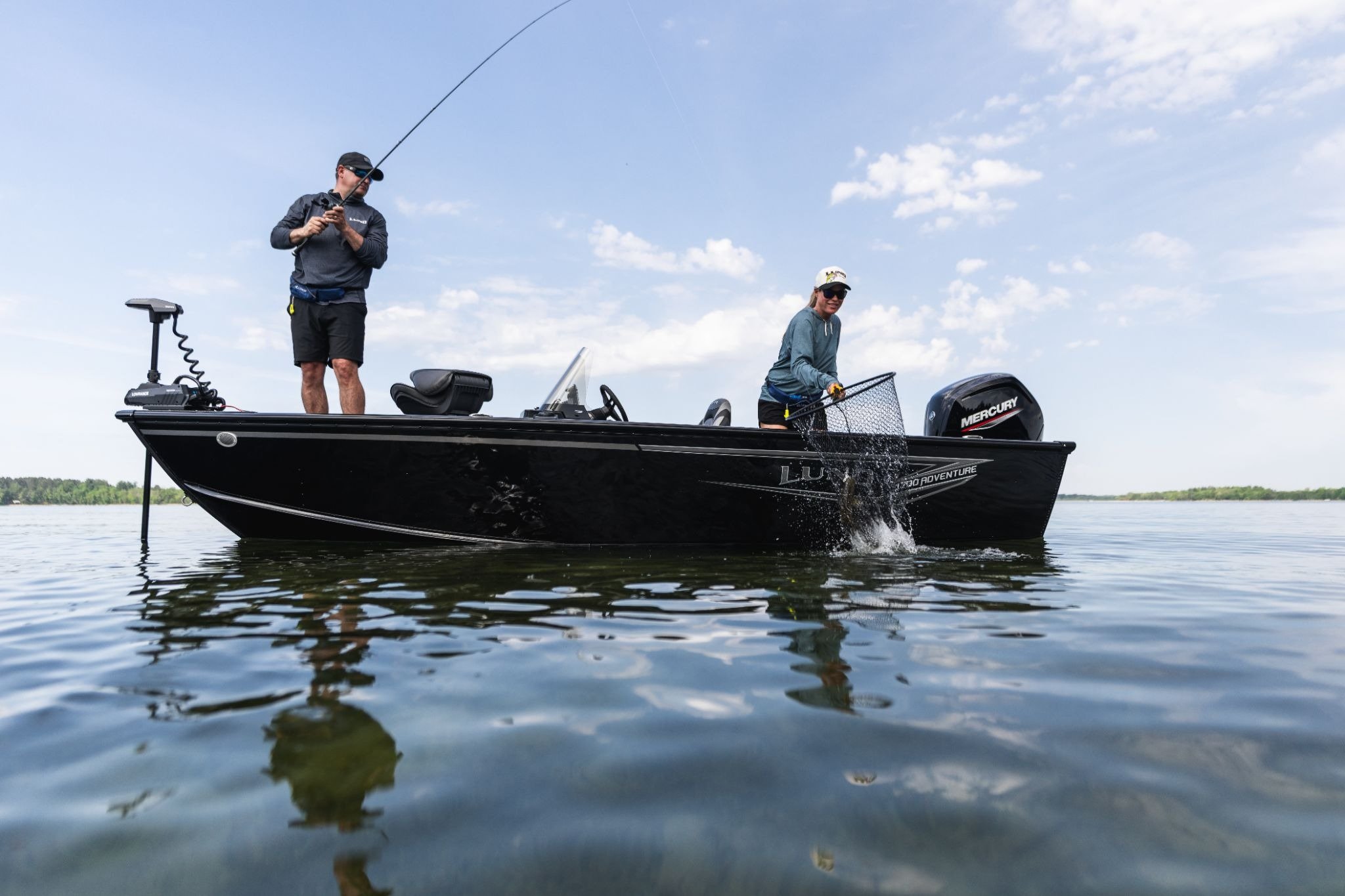
Many Lund fishing boats are available with factory-installed electronics and trolling motor packages.
When the factory equipment meets your needs, it is generally the most economical option.
Factory installation can also simplify how wiring and equipment are incorporated into the boat during manufacturing.
However, some anglers prefer particular brands, such as Garmin or Lowrance, or want a combination of equipment that is not offered in a factory package.
At Mobile Marine, our team provides custom fishing boat rigging and equipment installations for customers who want a more personalized setup.
We recommend discussing electronics, trolling motors, kicker motors and other accessories before ordering your boat so the complete package can be planned properly.
8. Choosing a Fishing Boat for Ontario Lakes
Ontario offers an incredible variety of fishing opportunities, from sheltered inland lakes and rivers to larger, more exposed bodies of water.
Around Huntsville and Muskoka, customers regularly enjoy Lake Muskoka, Lake Rosseau, Lake Joseph, Lake of Bays and many smaller lakes.
Others travel to Georgian Bay or explore fishing destinations throughout the province.
Consider Your Typical Water Conditions
If you mainly fish sheltered lakes, a compact boat may provide everything you need.
If you regularly navigate larger, more exposed water, you may prioritize hull design, freeboard, appropriate horsepower and weather protection.
Weather conditions can change quickly, and even familiar lakes can become challenging. No boat design eliminates the need to monitor conditions and operate within safe limits.
Consider How Often You Trailer
For anglers who travel between lakes, the trailer and towing setup are important parts of the purchase.
Consider the complete towing weight, your vehicle's capacity, launch-ramp conditions and how easily the boat can be handled.
A boat that suits your fishing style should also be practical for the way you transport and store it.
9. Which Lund Fishing Boat Is Right for You?
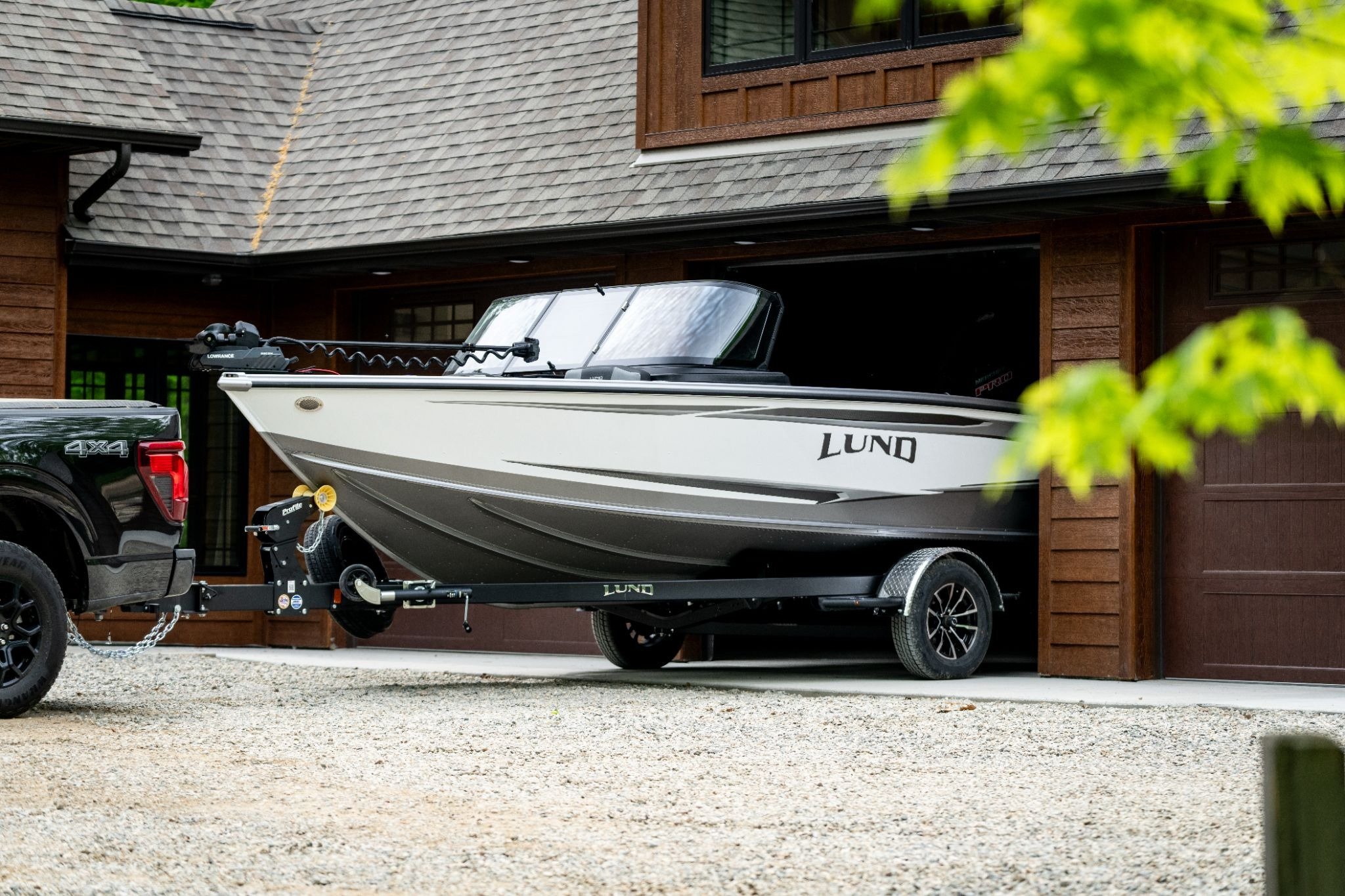
Lund offers a broad selection of aluminum fishing boats, from compact fishing models to larger, extensively equipped boats for serious anglers and family recreation.
At Mobile Marine, some of our popular models include the Impact, Crossover, Adventure and Fury.
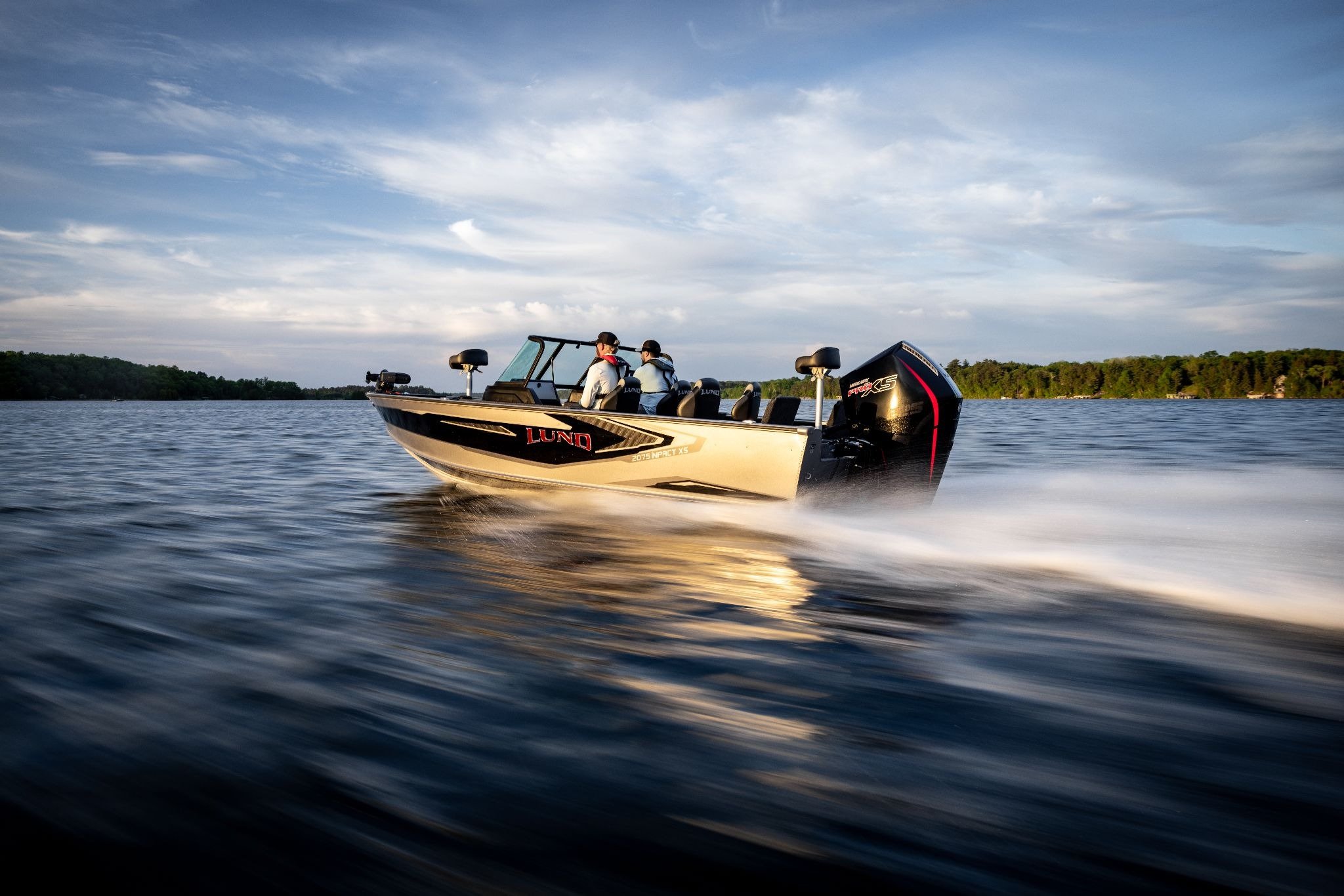
Lund Impact
Our best-selling Lund model, the Impact is a versatile choice for customers who want fishing capability, comfortable passenger accommodations and recreational features.
Lund Crossover
The Crossover is worth considering for buyers who want a fishing-focused aluminum boat with additional versatility for family activities.
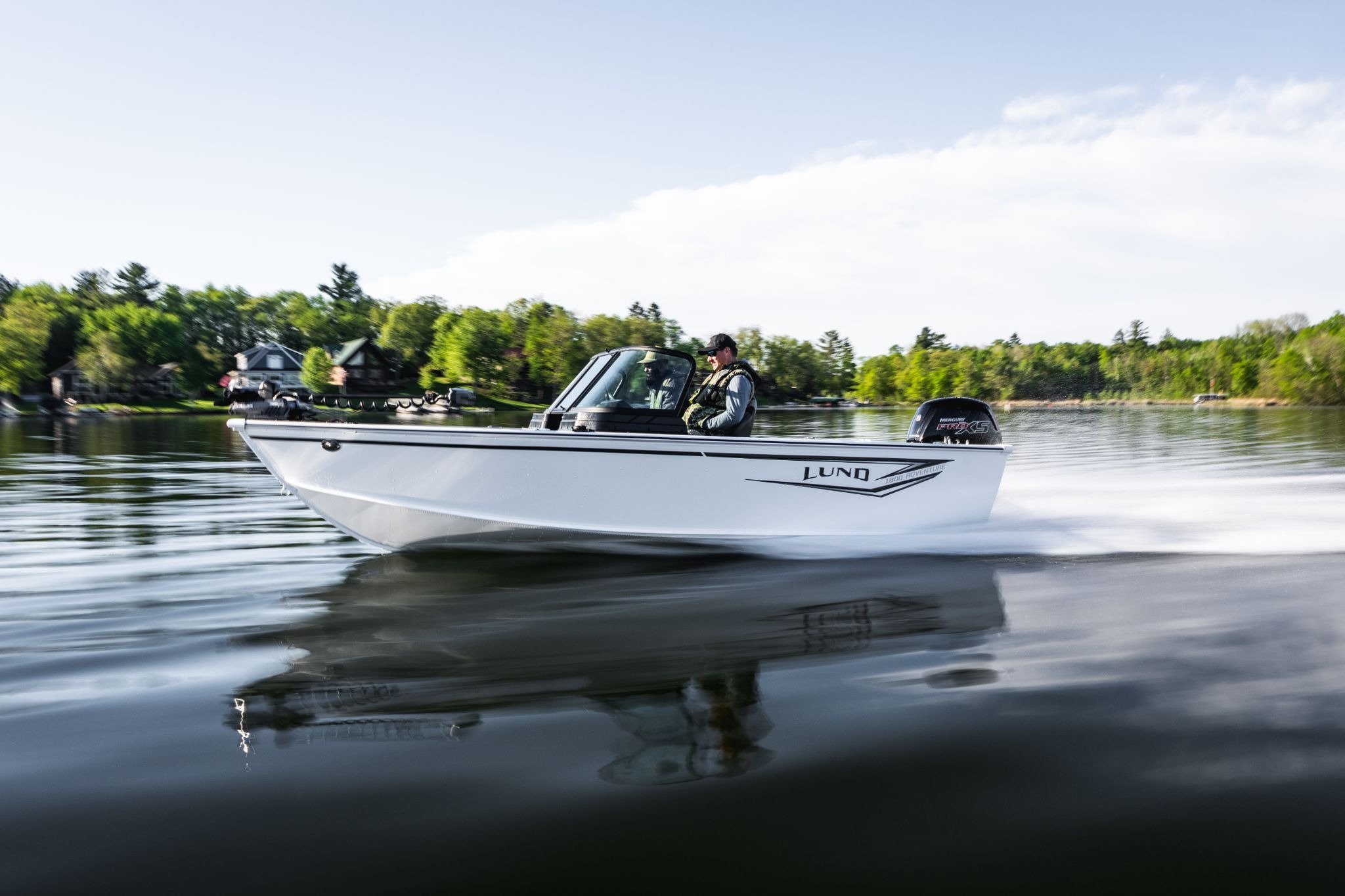
Lund Adventure
The Adventure offers a practical combination of fishing features, comfort and functionality for customers seeking a well-rounded fishing boat.
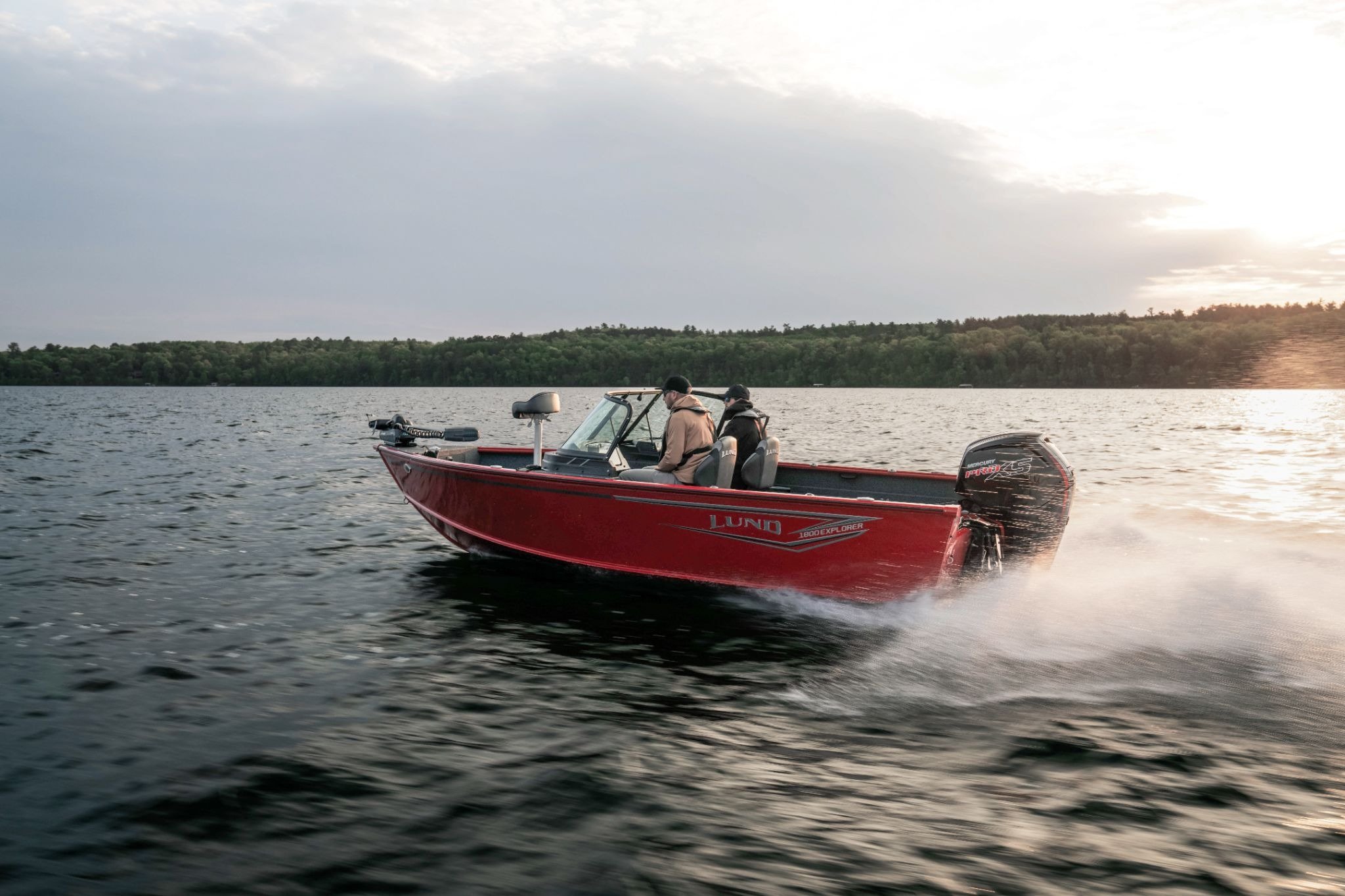
Lund Explorer
The Explorer is a practical, fishing-focused aluminum boat that offers useful fishing space, storage and comfortable seating in a manageable package. It is worth considering for anglers who want a versatile boat for regular fishing trips without stepping into a larger, premium model.
Premium Lund Fishing Boats
For anglers seeking more space, powerful outboards and sophisticated fishing equipment, Lund also offers larger premium models.
Depending on the model and configuration, these boats may include advanced electronics, multiple displays, specialized storage, upgraded seating and extensive fishing accessories.
Some highly equipped premium fishing boat packages can approach $200,000 CAD, illustrating just how broad the aluminum fishing boat market has become.
A premium boat is not necessarily the right choice for everyone, but for customers who spend significant time on the water and want specialized capability, the additional features can provide real value.
The best way to compare models is to consider their layout, hull design, engine options and available equipment in relation to your own priorities.
10. Buying a Fishing Boat: Budget, New vs. Used and Financing
The purchase price is only one part of the overall value of a fishing boat.
A less expensive package may meet your needs perfectly. Alternatively, investing in more horsepower, additional space or particular fishing equipment may help you avoid wanting to upgrade sooner than expected.
Consider the cost of the complete package, including the boat, engine, trailer, electronics and accessories.
You should also account for insurance, fuel, maintenance and seasonal storage.
New vs. Used Aluminum Fishing Boats
Both new and pre-owned aluminum fishing boats can offer excellent value. The right choice depends on your budget, preferred features and priorities.
Buying a new fishing boat allows you to choose the model, engine and available equipment that best suit your needs, subject to availability, along with applicable manufacturer warranty coverage.
Buying a pre-owned fishing boat may allow you to purchase a larger or better-equipped model within your budget. There are many quality used boats available, and a well-maintained boat can provide years of enjoyable fishing.
However, it is important to look beyond the model year and asking price. A used boat may have been repowered with a newer outboard, so the age of the hull and engine may differ. Engine hours, maintenance history and overall condition should all be considered. Hours alone do not determine an engine's condition.
Warranty coverage is also worth reviewing. For example, Lund's limited lifetime warranty on specified components applies to the original owner and does not transfer, although certain other coverage may be transferable. The boat and outboard may have separate warranties.
Where you purchase a used boat and the steps you take before committing are important. If buying privately, we strongly recommend arranging an inspection by a qualified marine technician. A reputable dealership should also be transparent about its inspection process and any maintenance or repairs completed.
At Mobile Marine, our pre-owned boats are inspected by trained technicians. We provide customers with a completed inspection checklist and disclose any maintenance or repairs we have performed. We believe that work completed before the sale is potentially one less thing the new owner will need to address.
While no inspection can predict every future mechanical failure, it can help identify existing concerns and provide greater peace of mind.
A quality used boat can be an excellent purchase. The key is knowing what you are buying and making an informed decision.
Financing Options
Financing is available on eligible new and pre-owned boats.
Our marine financing options include open loans that may allow additional principal payments or early repayment without penalties, subject to the agreement.
When comparing financing options, consider the total cost of borrowing rather than focusing exclusively on the monthly payment.
11. Consider Availability, Service and Winter Storage
If you are interested in a particular Lund model or equipment package, shopping early can provide more options.
Production availability varies by model and configuration, and popular boats may sell out before the season begins.
It is also worth considering the support available after purchase.
Routine maintenance, winterization, storage, repairs and access to knowledgeable technicians all contribute to the ownership experience.
At Mobile Marine, we provide marine service, winterization, storage, mobile service and boat pick-up and delivery throughout our service area.
Customers who purchase a boat from Mobile Marine are offered winter storage space.
Some customers have been with the dealership for more than 30 years, and we believe that supporting boat owners after the sale is just as important as helping them choose the right boat.
12. Your Aluminum Fishing Boat Buying Checklist
Before making your decision, ask yourself:
-
Where will I fish most often, and what water conditions will I encounter?
-
Which fishing techniques do I enjoy?
-
How many passengers will typically be aboard?
-
Will I also use the boat for cruising, swimming or watersports?
-
What hull design and boat size best suit my needs?
-
Would I prefer a tiller, side console or full windshield?
-
What horsepower will provide the performance I expect?
-
Which electronics and fishing accessories are most important?
-
Would I benefit from a trolling motor, kicker motor or both?
-
Will I regularly trailer and launch at different lakes?
-
What is my budget for the complete package and ongoing ownership?
-
If buying used, have I reviewed the inspection results, engine hours, maintenance history and remaining warranty coverage?
-
What service and support will be available after purchase?
You do not need to know every technical detail before visiting a dealership. A clear understanding of how you want to use your boat is the best starting point.
Frequently Asked Questions About Aluminum Fishing Boats
Are Aluminum Fishing Boats Good for Muskoka Lakes?
Yes. Aluminum fishing boats are popular throughout Muskoka because they are available in a wide range of sizes, hull designs and configurations.
The best choice depends on the conditions you encounter and how you plan to use your boat.
What Is the Best Size Aluminum Fishing Boat?
There is no single best size. Smaller boats can be excellent for sheltered lakes and easy transportation, while larger boats may offer more space, comfort and equipment capacity.
Is a Deep-V Fishing Boat Better?
A deep-V hull can provide a more comfortable ride in choppy water, but the best design depends on your fishing style, operating conditions and preferences.
Should I Buy a Tiller or Console Fishing Boat?
Tiller boats generally maximize open fishing space and offer direct steering control. Console boats provide steering-wheel operation and varying degrees of wind protection.
Can You Use a Lund Fishing Boat for Tubing?
Many Lund models can be equipped for approved tow sports. Always follow the manufacturer's requirements for horsepower, towing equipment and safe operation.
Should I Choose the Maximum Horsepower?
We generally recommend considering the maximum manufacturer-rated horsepower, particularly when performance and versatility matter. The right engine should still suit your budget and boating needs.
Do I Need a Kicker Motor?
A kicker can be valuable for extended trolling, precise low-speed control and backup propulsion, depending on the boat and fishing style.
Are Premium Fishing Electronics Worth It?
For anglers who regularly use advanced sonar, mapping and positioning technology, premium electronics can provide meaningful benefits. Choose equipment based on the techniques you use rather than the number of available features.
Can I Customize My Fishing Boat Electronics?
Yes. Many Lund boats offer factory-installed equipment packages, which are generally the most economical choice when they meet your needs.
Mobile Marine also provides custom rigging and electronics installations for customers who prefer specific equipment or configurations.
Find Your Next Aluminum Fishing Boat at Mobile Marine
Choosing the right aluminum fishing boat starts with understanding how you want to spend your time on the water.
Whether you are looking for a compact fishing boat, a deep-V model for larger lakes, a versatile boat for family recreation or a premium fishing package, our team can help you compare the options.
Mobile Marine is a family-owned, full-service marine dealership in Huntsville, Ontario, serving customers throughout Muskoka, Lake of Bays, Almaguin Highlands and surrounding communities.
With more than 30 years of history serving local boaters, we understand that finding the right boat is only part of the ownership experience.
From selecting the right Lund and engine package to custom rigging, maintenance, winterization, storage and pick-up and delivery, our team is here to support you throughout boat ownership.
Explore our Lund fishing boat inventory or contact our team to find a boat that suits your fishing style, family and budget.
Contact Us 705-789-3932 sales@mobilemarine.com
Category Name
Blogs
Manufacturer Qty
0